



Money is not merely a medium of exchange. Beyond its economic value, it has an ethical value that is manifested every time we earn and spend it. Being mindful of how we use it is, ultimately, a way of respecting our time, the work of others, and the environment in which we live.
The ritual of consciousness: Lessons from Japan and France
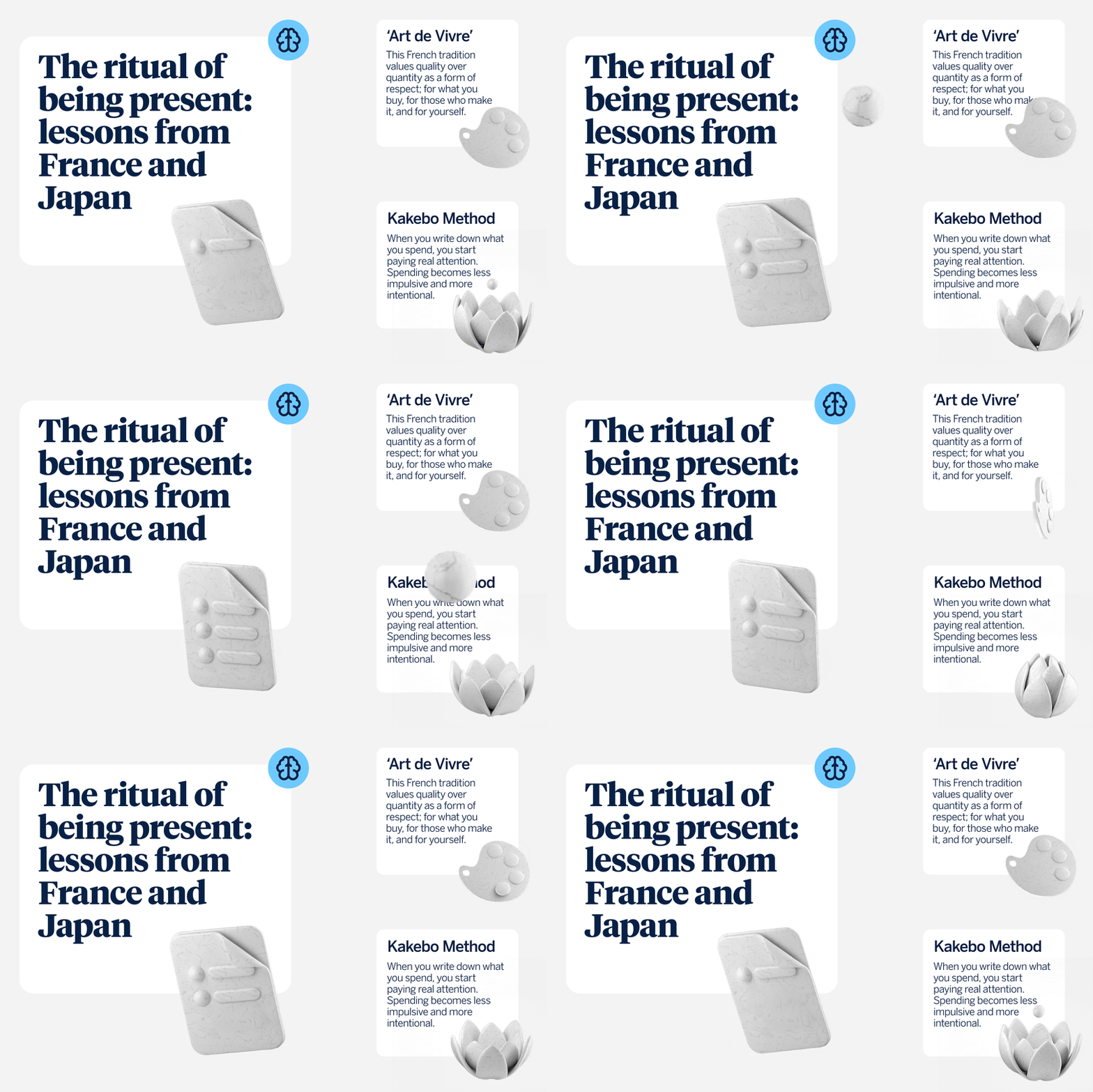
To understand money as something living, we must look to cultures that have elevated resource management to the category of art. In Japan, the Kakebo method is not simply a savings tool, but an exercise in introspection. Writing down each expense by hand makes you really feel it, makes you aware of what it entails. It is not a cold accounting record, it is a ritual of care where one reflects on the meaning of each outflow of money. In this way, the effort made to earn it is honored, and the value received in handing it over is acknowledged. Japanese minimalism teaches us that eliminating superfluous spending is not a deprivation, but a search for harmony so that what remains is truly essential.
For its part, the French tradition of Art de vivre teaches us what it means to spend respectfully. In contrast to compulsive consumption, French philosophy champions the value of things done well. Choosing quality over quantity is not a luxury; it's a different way of relating to money, and opting for a good artisanal product, a food grown with care, or an object designed to last is also a form of respect towards those who create it and towards oneself. It's about understanding that spending wisely can also be a way to enjoy life more and better, while maintaining standards, excellence, and respect for craft.
The economy of the soul and vital energy
We can also look at it from a more personal and simple perspective: money is a distillation of time. EF Schumacher, author of Small is beautiful, considers that conscious consumption is not a restriction, but an act of freedom. For him, spending with respect means looking beyond the object you acquire. It's about valuing the well-being of the person who made it and the environmental impact it leaves behind. By simplifying our lives and reducing our consumption, we protect the people who make what we buy and the planet itself.
But there's an even more direct idea: behind everything you buy are hours of your life. Giving money its true value often means asking oneself an essential question: how much "vital energy" has this cost me? Because money isn't notes and coins but the hours of your life that you spent earning it. When you do that calculation, many decisions cease to be impulsive. And saying "no" stops feeling like a renunciation and becomes a way of taking care of yourself, an exercise in self-love and respect for your time and that of others in this world.
This realization is also a good remedy for alleviating the feeling of scarcity that often accompanies us. We live in a world where it always seems like something is missing, but when you pay attention to how you spend your money, your perspective changes. As author Lynne Twist explains in The soul of money, conscious spending acts as an energy flow that breaks that cycle. When we use it intentionally, we move from lack to sufficiency and are able to recognize its value as a tool to generate impact.
In the end, our bank account is not just a list of transactions. It's a story. The story of what we choose, what we value, and what we prioritize. It speaks of our fears, our aspirations, and also how we imagine the future. Because, deep down, how you spend your money says more about you than how much you have..